TL;DR: Fire damage restoration removes soot and smoke residue, treats lingering odor, and repairs or rebuilds whatever the fire and firefighting water destroyed. The process usually starts within 24 to 48 hours of the fire being cleared: board-up and water extraction first, then soot and debris removal, HEPA air scrubbing for odor, and finally reconstruction. Most standard homeowners policies cover accidental fire damage, including the water used to put it out, as long as the policy was active and the cause wasn’t excluded (like arson).
If flames broke out in your kitchen or garage last night and the fire department just cleared the scene, you’re probably standing in a stucco-walled Henderson home staring at warped cabinets, soot streaking the ceiling, and a smell already working into the carpet and furniture. You don’t have to figure this out alone, and you don’t have to start cleanup yourself. The next 48 hours determine how much of your home and your belongings can actually be saved, so here’s what matters first.
What should you do in the first few hours after a fire?
Get a structural clearance from the fire department before re-entering, then call your insurance carrier and a restoration company the same day. Fire damage keeps getting worse after the flames are out: soot turns acidic on metal and glass within hours, and smoke odor embeds deeper into porous materials every day it sits untreated.
Don’t try to wash soot off walls or fabric with water. Wiping dry soot with a wet rag smears it and drives it deeper into the surface, which is one of the most common mistakes homeowners make before a crew arrives. Leave windows and doors closed if the structure is stable; opening the house up actually pulls more soot particles into unaffected rooms as air moves through.
If the fire department shut off utilities, don’t try to restore gas or electric service yourself. A qualified technician needs to confirm the wiring and gas lines are safe before power goes back on, especially in a home with smoke damage to the attic or wall cavities.
What does the fire damage restoration process actually involve?
Fire damage restoration follows a sequence: stabilize the structure, remove water and debris, treat smoke odor, then repair or rebuild. Each phase depends on the one before it, which is why DIY cleanup usually makes later repairs more expensive, not less.
- Board-up and tarping. Broken windows, a burned-through roof section, or a collapsed wall gets covered to stop weather and theft exposure, usually the same day.
- Water extraction. Firefighting leaves standing water and saturated drywall behind. This gets pumped and dried before soot removal starts, following the IICRC S500 water drying standard.
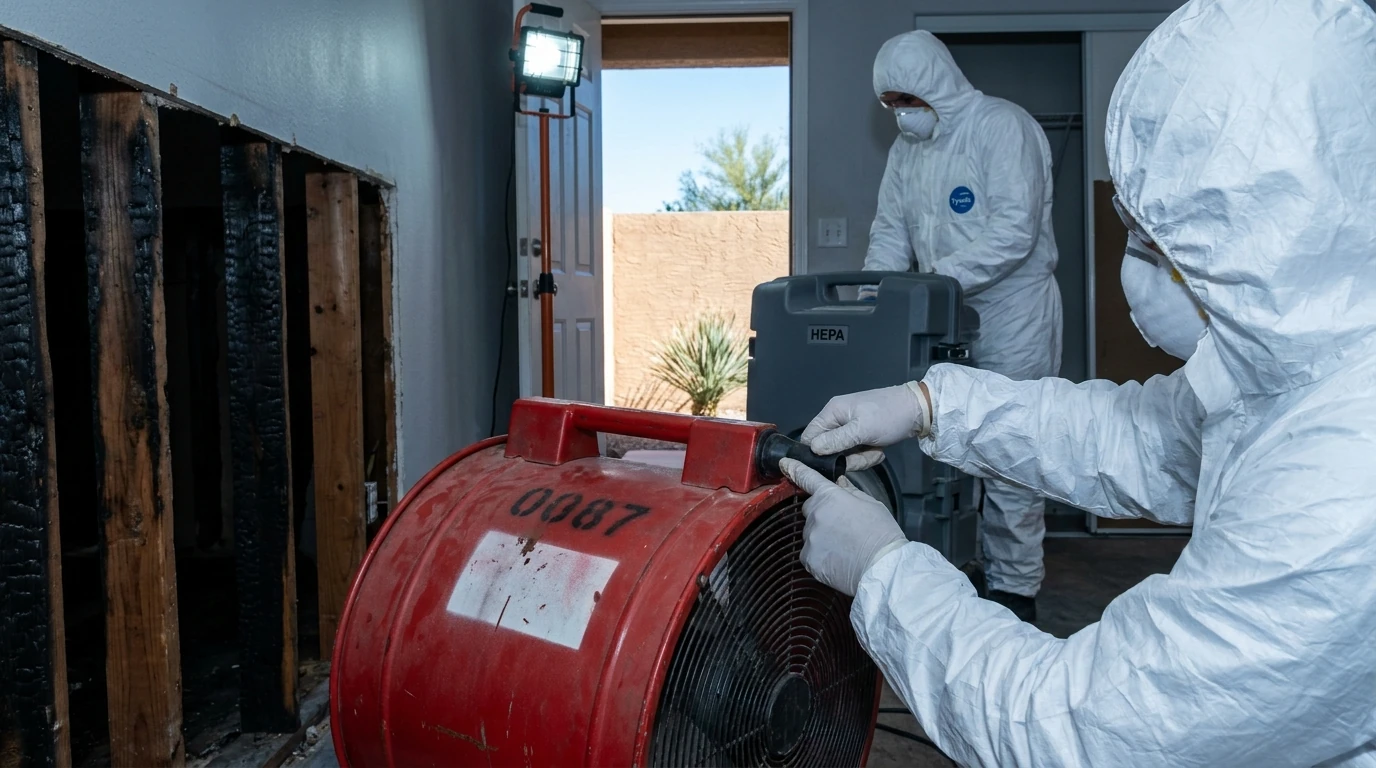
- Soot and debris removal. Charred materials, damaged drywall, and soot-coated contents get removed or cleaned, separating what’s salvageable from what isn’t.
- Odor treatment. HEPA air scrubbers and thermal fogging or hydroxyl generators break down smoke particles trapped in framing, insulation, and fabric, rather than masking the smell with a spray.
- Reconstruction. Drywall, flooring, cabinetry, and paint go back in once the structure tests dry and odor-free.
For homes with heavy smoke penetration, our odor removal process post on the restoration process walks through what each phase looks like in more detail.
Will homeowners insurance cover fire damage?
Most standard homeowners and renters policies cover fire damage, including smoke damage and the water used to extinguish the fire, as a named peril. Coverage typically includes structural repair, contents replacement, and often additional living expenses if the home is uninhabitable during repairs.
What gets disputed is scope, not whether the claim is valid. Adjusters sometimes propose cleaning soot off surfaces that actually need replacement, or they underestimate how far smoke odor has traveled into HVAC ducting and wall cavities. A documented restoration estimate, with moisture readings and odor-testing notes, gives you something concrete to negotiate from rather than taking the first number offered.
Keep every receipt for emergency lodging and temporary repairs starting the day of the fire. Most policies reimburse additional living expenses, but only with documentation.
Who should you call for fire damage restoration in Henderson?
Call a restoration company with IICRC FSRT (Fire & Smoke Restoration Technician) certification, not a general cleaning service, since smoke damage assessment and odor remediation require specific training beyond standard cleanup. Life Savers Restoration LLC holds IICRC FSRT certification and works fire losses throughout Henderson and the greater Las Vegas valley, coordinating directly with insurance adjusters on scope and documentation.
Before hiring anyone, confirm they’re licensed with the Nevada State Contractors Board and ask whether they handle the full sequence (water extraction through reconstruction) or only part of it. Splitting the job across multiple contractors often creates gaps in documentation that slow down your claim.
Fire damage doesn’t wait for a convenient time to get worse. The sooner soot and odor treatment starts, the more of your home’s original materials and belongings are likely to survive the cleanup. Call Life Savers Restoration LLC at (702) 845-1325 to schedule a fire damage assessment.
About Life Savers Restoration LLC
Life Savers Restoration LLC is an IICRC Certified Firm serving Henderson and the Las Vegas valley since 2019, licensed under NV contractor license #0091001. Their technicians hold IICRC FSRT (Fire & Smoke), WRT, and ASD certifications and handle fire damage restoration, water damage, mold remediation, and related services across the region. This post was prepared with input from the Life Savers Restoration LLC team.