TL;DR: In Henderson, NV, mold remediation typically costs between $500 for a small bathroom patch and $15,000 or more for extensive structural mold. Most single-room jobs fall between $1,500 and $4,000. The biggest cost drivers are how much square footage is affected, whether the mold is hidden behind walls or in an attic or crawlspace, and whether the moisture source has already been fixed. Homeowners insurance rarely covers mold unless it stems from a sudden, covered water loss.
If you just got a mold inspection report back, or you spotted dark staining near an AC vent after this summer’s monsoon humidity finally broke, you’re probably staring at a number you don’t understand yet. Mold remediation pricing swings widely because every job is different: a ring of surface mold in a Green Valley bathroom costs nothing like a crawlspace that’s been damp for months near Lake Las Vegas. Here’s what actually moves the price, and what a legitimate scope of work should look like before anyone starts cutting into drywall.
How Much Does Mold Remediation Cost in Henderson?
Most Henderson homeowners pay somewhere between $500 and $8,000 for mold remediation, with whole-home or structural cases running higher. The exact number depends on square footage, the material affected (drywall and insulation vs. tile and concrete), and whether containment and negative air pressure are required.
A small, contained patch, like mold around a bathroom exhaust fan or under a sink, sits at the low end. Anything involving an attic, a crawlspace, or HVAC ductwork costs more because access is harder and air scrubbing equipment has to run longer. These are typical industry figures, not a quote: every property is different, and Life Savers Restoration LLC provides a written scope of work before any remediation begins.
What Does Mold Remediation Cost By Scenario?
Costs scale with the size of the affected area and how contained the work can be kept. The table below reflects typical ranges seen across the industry for residential jobs of this type.
| Scenario | Typical Cost Range |
|---|---|
| Bathroom or small enclosed mold (under 10 sq ft) | $500 - $1,500 |
| One room, moderate growth (10-30 sq ft) | $1,500 - $4,000 |
| Attic mold from roof or ventilation leaks | $2,000 - $6,000 |
| Crawlspace mold remediation | $3,000 - $8,000 |
| HVAC duct and air handler contamination | $1,500 - $5,000 |
| Whole-home or extensive structural mold | $6,000 - $15,000+ |
Mold testing is a separate line item from remediation and usually costs less. A pre-remediation inspection with air sampling or surface swabs typically runs a few hundred dollars, while post-remediation clearance testing (confirming the air is clean after the work) adds a similar amount. Skipping testing to save money is a common mistake: without a clearance test, there’s no documented proof the job actually worked.
What Drives Mold Remediation Pricing Up or Down?
Four factors decide where a job lands in that range: square footage affected, material type, accessibility, and whether the moisture source is already fixed. Jobs where water is still actively entering the structure cost more because remediation has to be redone if the source isn’t stopped first.
Henderson’s dry desert climate usually keeps mold in check, but a few local conditions change that. Older homes with swamp coolers (evaporative coolers) instead of central AC trap more humidity indoors than the climate would suggest. Condensate lines on standard AC units clog easily in the heat and dump water into attics or closets for weeks before anyone notices. Slab leaks and roof damage from the monsoon season also create the hidden, slow-moisture conditions mold needs. The EPA notes that mold can begin growing within 24 to 48 hours on a wet surface, so a leak that sits through a long weekend is often enough to start a colony behind a wall.
Material matters too. Mold on tile or concrete is a straightforward wipe-down and disinfect. Mold on drywall, insulation, or wood framing usually means removing and replacing porous material rather than cleaning it, because those materials hold spores in their structure even after the surface looks clean. Remediation performed to the ANSI/IICRC S520 standard treats porous, visibly contaminated material this way by default.
Does Insurance Cover Mold Remediation in Nevada?
Most homeowners insurance policies in Nevada provide limited or no coverage for mold, and only when it results from a sudden, covered water loss like a burst pipe. Mold caused by humidity, a slow leak, condensation, or deferred maintenance is typically excluded, even if the underlying water damage would have been covered.
That distinction matters because it decides whether a claim gets paid. If a supply line under a sink fails suddenly and mold develops within the week before it’s caught, many policies will cover remediation as part of the water damage claim, often up to a capped dollar amount for mold specifically. If the same mold grew slowly over months from a hairline pipe seep, most insurers will deny it as a maintenance issue. Reading the mold endorsement or exclusion language in your own policy, or calling the Nevada Division of Insurance with questions about your coverage, is worth doing before assuming either outcome. Documenting the source and the timeline with photos the day you find it strengthens whichever direction the claim goes.
What Happens During Mold Remediation?
A typical mold remediation job runs through five phases: inspection and moisture source identification, containment setup, air filtration, material removal and cleaning, and clearance testing. Each phase has to be done in order, or the job risks spreading spores to clean areas of the home.
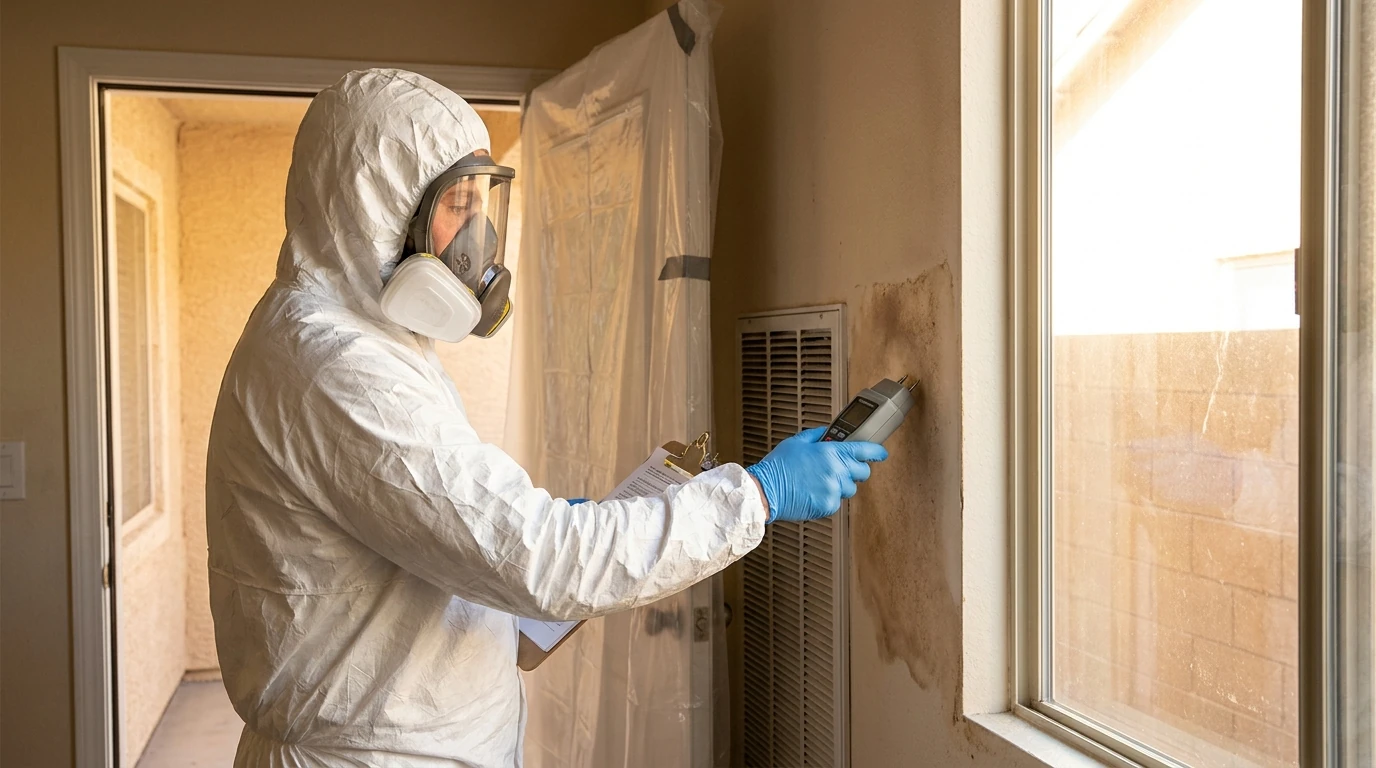
- Inspection - a technician identifies the moisture source and maps the extent of growth, sometimes with a borescope for wall cavities.
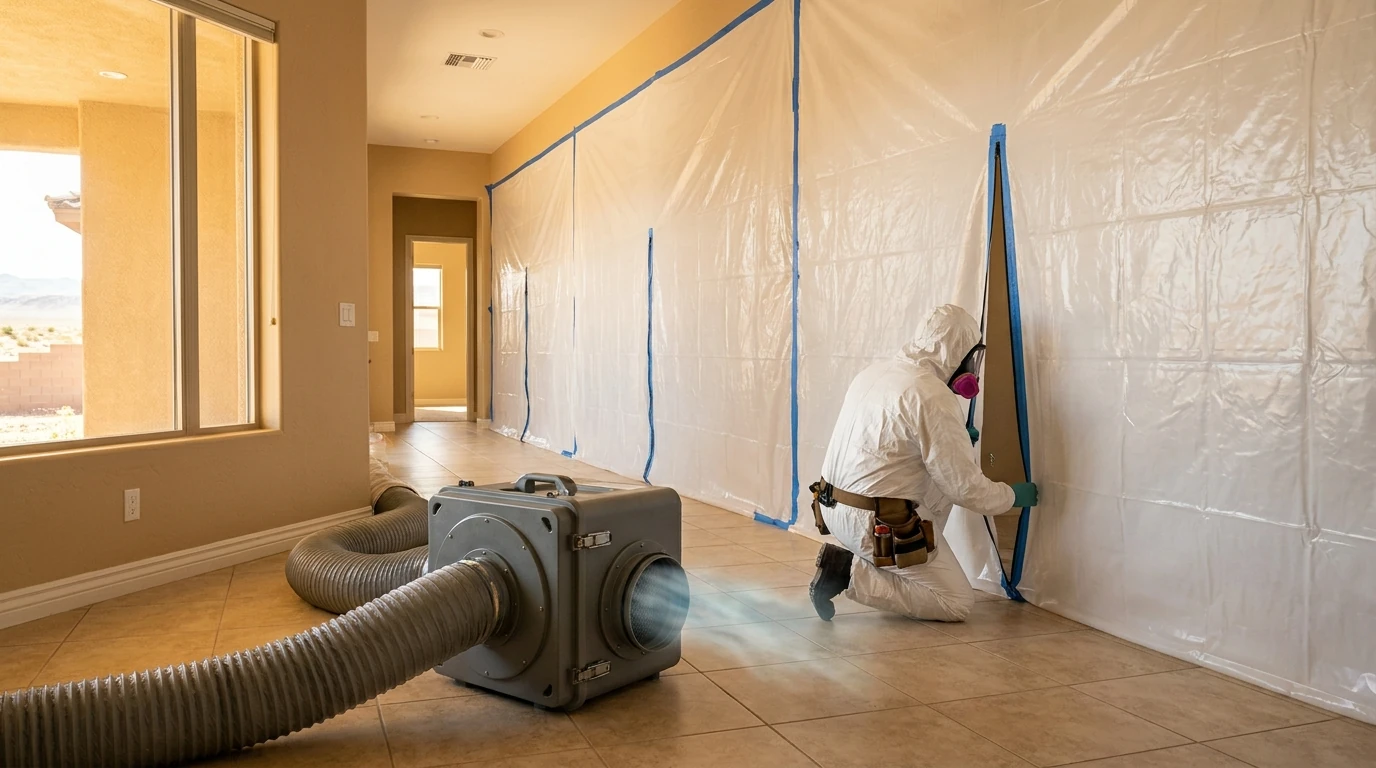
- Containment - poly sheeting seals off the work area and the HVAC system is isolated so spores can’t travel through the ducts.
- Negative air and filtration - HEPA air scrubbers run inside containment to capture airborne spores during the work.
- Removal and cleaning - porous materials (drywall, insulation, carpet) that can’t be cleaned are removed and disposed of; non-porous surfaces are HEPA-vacuumed and treated with an antimicrobial.
- Clearance testing - a third-party or follow-up air and surface test confirms spore counts are back to normal before containment comes down.
See how to test for mold for more on the difference between a DIY kit and a professional air sample, and 7 signs you have hidden mold if you’re still not sure whether what you’re looking at needs a professional at all.
What Should a Written Mold Remediation Scope Include?
A legitimate scope of work names the specific rooms and materials to be removed, the containment method, the equipment that will run and for how long, and the clearance testing that confirms the job is finished. If a quote is just a single number with no breakdown, that’s a red flag.
Ask for square footage of material being removed, the antimicrobial product being used, and whether post-remediation verification is included in the price or billed separately. A scope that skips clearance testing is cheaper for a reason.
If you’ve got a mold report in hand and aren’t sure what a fair scope looks like for your situation, Call Life Savers Restoration LLC at (702) 845-1325 to schedule a mold inspection and get a written scope before anything gets opened up.
About Life Savers Restoration LLC
Life Savers Restoration LLC is an IICRC Certified Firm serving Henderson, NV and the surrounding Las Vegas valley since 2019, holding Nevada contractor license #0091001. The company’s technicians carry IICRC WRT, ASD, AMRT, and FSRT certifications and are EPA Lead-Safe Certified. Their crews handle water damage restoration, mold remediation, fire and smoke damage restoration, sewage cleanup, odor removal, storm damage restoration, biohazard cleanup, trauma scene cleanup, and contents restoration and storage, and the company holds a 4.8-star rating across 247 Google reviews. This guide was prepared with input from Rudy Contreras and the Life Savers Restoration team.