TL;DR: Professional mold removal isolates the affected area with containment plastic, removes porous materials that can’t be cleaned (drywall, insulation, some wood), filters the air with HEPA equipment, and treats remaining surfaces with an EPA-registered antimicrobial. A surface wipe-down with bleach does not do this. In Henderson’s dry desert climate, mold almost always points to a moisture source, a slab leak, an AC condensation line, a roof leak from monsoon season, that has to be found and fixed or the mold comes back within weeks.
If you pulled back a baseboard in a Green Valley townhome or noticed a musty smell near the AC closet in a Lake Las Vegas rental and found fuzzy black or green growth, you’re probably wondering whether you can handle it yourself or whether this is a call-a-professional situation. The short answer: it depends on size and what’s behind the wall. Mold covering less than about 10 square feet (roughly a card table) is often a manageable DIY cleanup on non-porous surfaces. Anything larger, anything tied to a known water intrusion, or anything behind drywall usually needs a professional removal, not a cleaning.
What Is Professional Mold Removal, and How Is It Different From Cleaning?
Professional mold removal physically removes contaminated material and controls the air during the process; cleaning just wipes visible growth off a surface without addressing what’s underneath it or in the air. A crew working to the IICRC S520 mold remediation standard treats the job as containment, removal, and verification, not scrubbing and spraying.
That distinction matters because mold spores are microscopic and become airborne the moment you disturb a colony, whether that’s with a scrub brush, a vacuum, or a box fan aimed at a damp wall. Without containment and negative air pressure, a DIY cleanup can spread spores into rooms that were never affected. A bathroom problem becomes a hallway and closet problem.
Professional removal also distinguishes between surfaces that can be cleaned (tile, metal, sealed concrete) and porous materials that usually need to be cut out and replaced (drywall, carpet pad, water-damaged wood framing, insulation). Bleach doesn’t penetrate porous material deeply enough to kill mold growing inside it; it just discolors the surface while the colony persists underneath.
What Does the Removal Process Actually Look Like?
A typical job runs through four phases: assessment, containment, removal, and clearance. Each phase has a specific purpose, and skipping one is usually where DIY attempts and low-bid contractors go wrong.
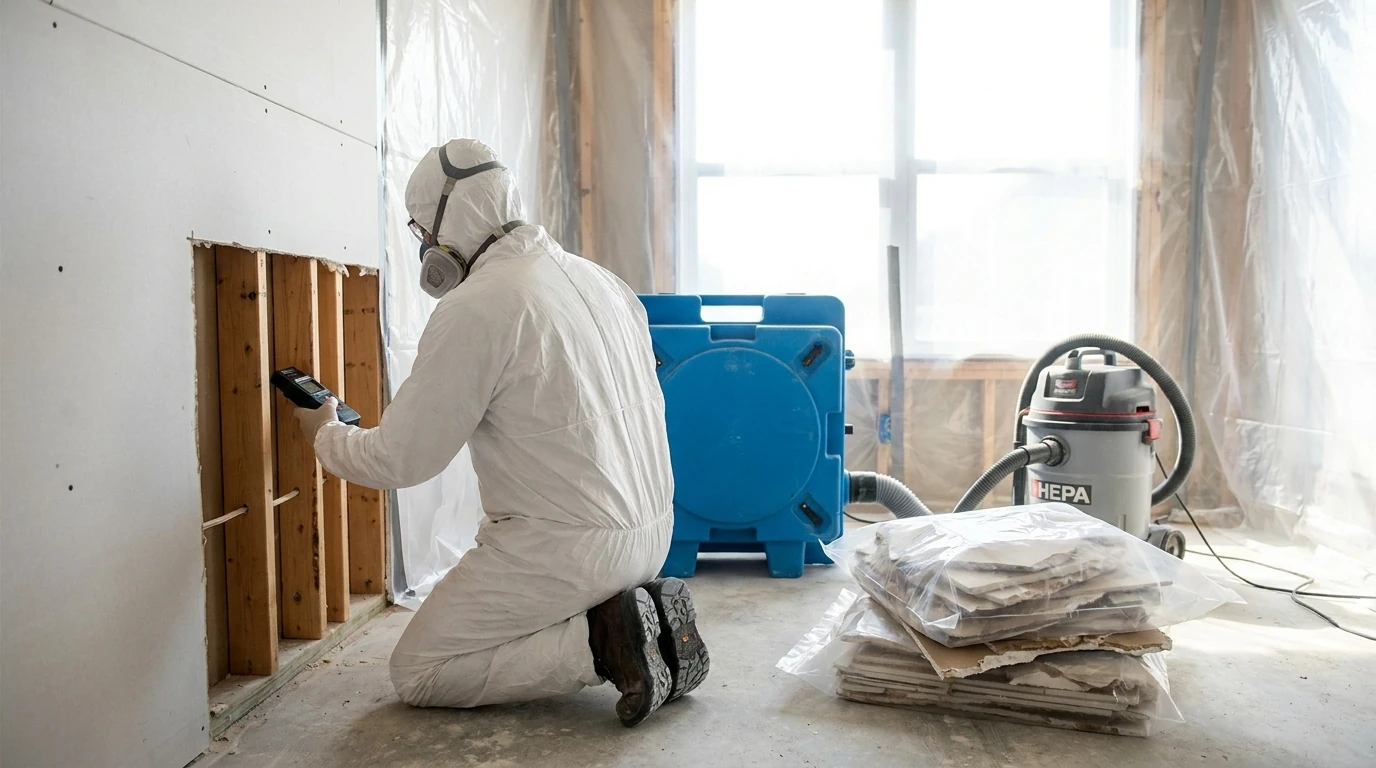
- Assessment. A technician identifies the moisture source (slab leak, roof intrusion, condensation, plumbing failure) and the extent of growth, often using a moisture meter and a borescope to check inside wall cavities without opening them unnecessarily.
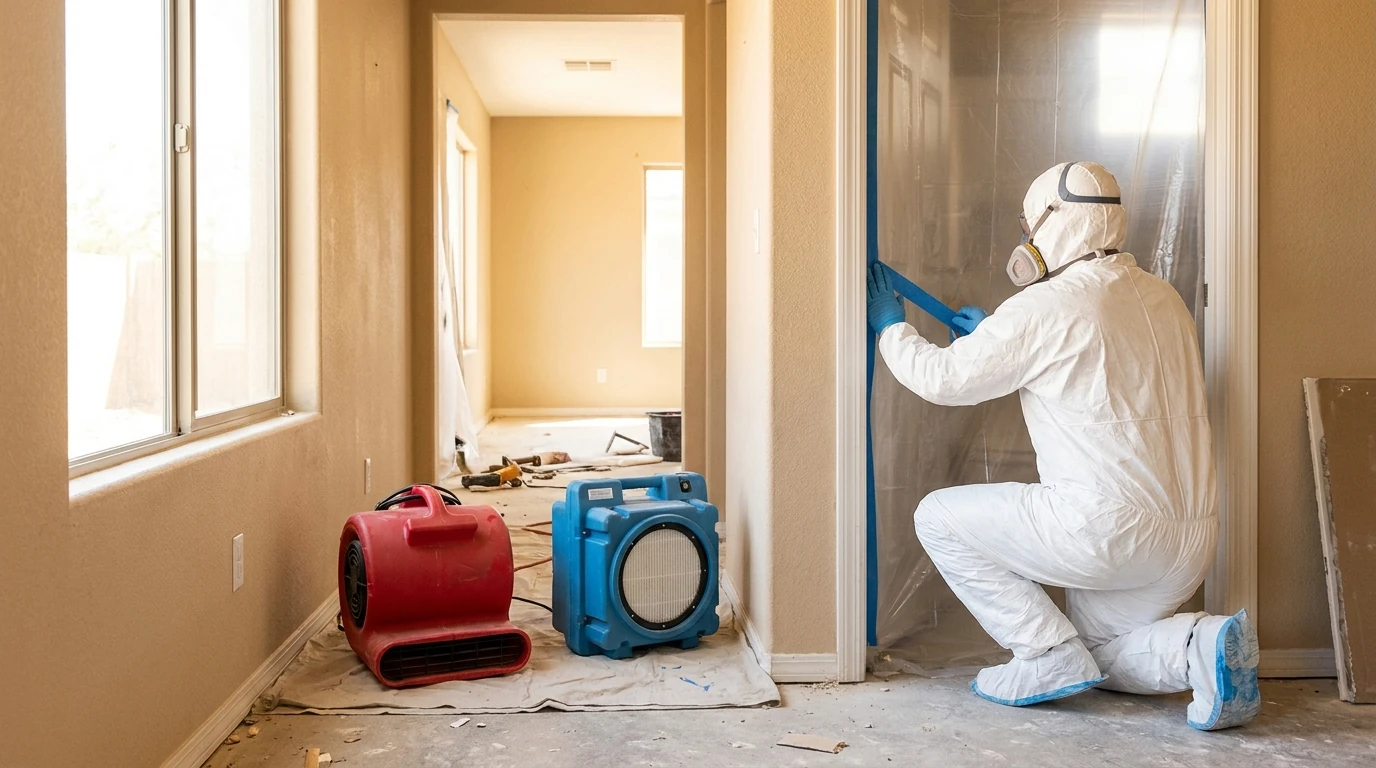
- Containment. Poly sheeting seals off the work area and an air scrubber or negative air machine keeps the space under slight negative pressure, so spore-laden air moves toward the filter, not out into the rest of the home.
- Removal. Affected porous material gets bagged and removed; salvageable surfaces are HEPA-vacuumed and treated with an EPA-registered antimicrobial. Dehumidifiers and air movers run afterward to bring the space to a normal moisture level.
- Clearance. A post-remediation verification, sometimes a visual check, sometimes third-party air or surface sampling, confirms spore counts in the treated area are back in line with the rest of the home before containment comes down.
In Henderson, the moisture source is rarely rain soaking through a roof the way it might be in a wetter climate. It’s more often a slow slab leak under tile, a clogged AC condensate line dripping into a closet for months, or a roof flashing failure that only shows up after a hard monsoon storm. Fixing the mold without fixing that source is a guaranteed repeat call within a season.
What Should You Watch For When Hiring a Mold Removal Company?
The biggest red flag is a company that quotes a mold job over the phone without an in-person assessment, since the price and scope depend entirely on what’s behind the wall. A fair quote follows a physical inspection, not a guess based on square footage alone.
Ask whether the technician is trained to the IICRC’s AMRT (Applied Microbial Remediation Technician) standard, and whether the company separates the remediation cost from any testing cost, since an unbiased third party, not the remediation company, should ideally handle post-job clearance testing to avoid a conflict of interest. Also ask what happens to the moisture source itself; a company that only addresses the mold and not the leak behind it is handing you a repeat job.
Watch for vague scopes of work. A written estimate should specify square footage of material to be removed, the equipment being used (air scrubbers, dehumidifiers, HEPA vacuums), and an estimated timeline. If a bid is unusually low compared to others, ask what’s being left out, often it’s containment or proper disposal of contaminated material, both of which cost real time and labor.
If the growth followed a known water event, like a burst supply line or an appliance leak, our water damage restoration guide covers how fast mold can start forming after a loss and why dry-out speed matters as much as the mold removal itself.
What Happens After the Mold Is Removed?
After removal, the space needs to dry back down to a normal relative humidity, usually under 50%, before any rebuild work (new drywall, paint, flooring) begins. Rebuilding over a space that hasn’t fully dried just sets up the next colony.
Most reputable companies will recommend a clearance check, air sampling, surface swabs, or at minimum a visual inspection, before closing out the job. If the underlying moisture source wasn’t permanent plumbing (say, a one-time appliance leak), a single clearance check is often enough. If it was a slow, ongoing source like a slab leak, expect a follow-up recommendation to monitor humidity in that area for a few weeks.
For homeowners near Lake Las Vegas or in older Anthem properties with evaporative cooling add-ons, it’s also worth having an HVAC tech check condensate lines annually; that single preventive step resolves a large share of the recurring mold calls in this part of the valley.
If you’re still trying to figure out whether what you’re looking at is actually mold or just mineral staining, our post on black mold vs. regular mold walks through the visual differences, and our guide to testing for mold covers DIY kits versus a professional air sample.
Mold that’s spreading, smells musty, or followed any kind of water event in your home is worth a professional look before it gets into framing or ductwork. Call Life Savers Restoration LLC at (702) 845-1325 to schedule a mold assessment in Henderson or the surrounding valley.
About Life Savers Restoration LLC
Life Savers Restoration LLC is an IICRC Certified Firm serving Henderson, NV and the greater Las Vegas valley since 2019, licensed with the Nevada State Contractors Board (license #0091001). Their technicians hold IICRC AMRT mold remediation training alongside water, structural drying, and fire/smoke credentials, and the company is rated 4.8 stars across 247 Google reviews. This article was prepared with Rudy Contreras and the team at Life Savers Restoration LLC.