TL;DR: Water damage is any unwanted water intrusion into a structure, from a slab leak to a washing machine hose failure, and it needs attention within 24 to 48 hours to prevent mold growth. Restoration involves extraction, drying to the IICRC S500 standard, and repair. Most homeowners policies cover sudden water damage (a burst pipe) but exclude damage from long-term neglect (a slow leak you ignored for months).
If you just found water pooling under the kitchen sink in your Green Valley home, or your slab is pushing moisture up through the tile in Seven Hills, you’re probably wondering two things: how bad is this, and what happens next. Henderson’s slab-on-grade construction and hard water lines mean leaks here often start underground or behind a wall, unseen for weeks before they surface. The good news: most water damage is fully recoverable if it’s addressed fast.
What Actually Counts as Water Damage?
Water damage is any water intrusion that affects building materials, furnishings, or structural components, not just visible flooding. It includes slow leaks behind walls, HVAC condensation pooling in an attic, roof intrusion during a monsoon storm, or a supply line failure under a sink.
In Henderson, the most common sources aren’t dramatic floods. They’re failed water heater connections, slab leaks from aging copper pipe under the foundation, and washing machine supply hoses that split after years in the dry desert air (heat accelerates rubber hose degradation). A slab leak can run for days before you notice a warm spot on the tile or a spike in your water bill.
The IICRC classifies water damage by contamination level: Category 1 is clean water (a supply line break), Category 2 is “gray water” with some contaminants (a washing machine overflow), and Category 3 is “black water” with sewage or groundwater contamination that requires full PPE and disposal of porous materials. The category determines what can be dried in place and what has to be removed. Our Category 3 water damage guide covers that distinction in more detail.
How Fast Does Water Damage Need to Be Addressed?
Water damage needs professional attention within 24 to 48 hours to prevent secondary damage, because mold spores already present in drywall and framing begin to colonize once materials stay wet past that window. This isn’t a scare number, it’s the timeline the EPA cites for mold growth on wet porous materials.
The first 24 hours matter most. Standing water needs to be extracted, not just mopped, because carpet pad and subfloor hold moisture long after the surface looks dry. Drywall wicks water upward from the baseboard, sometimes a foot or more, which is why a technician will cut an inspection hole rather than guess. If you haven’t started this process yet, our first-24-hours checklist walks through what to do before help arrives.
Waiting past 48 hours doesn’t just risk mold. It usually means more material has to be removed instead of dried and saved, which raises the cost and the timeline substantially.
What Does the Water Damage Restoration Process Actually Involve?
Professional water damage restoration follows four phases: inspection and moisture mapping, extraction, structural drying, and repair. Each phase has a measurable endpoint, not a guess.
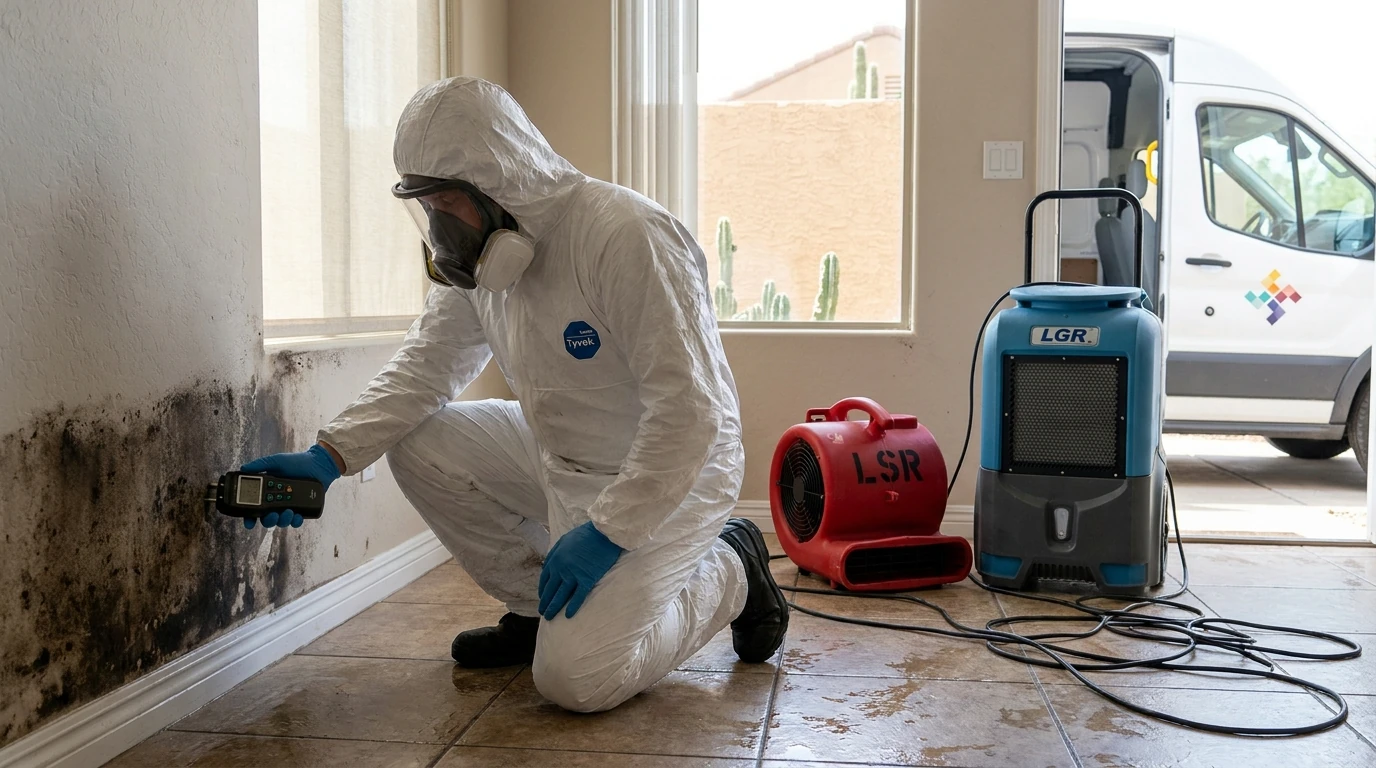
Inspection comes first. A technician uses a moisture meter and sometimes a thermal camera to map exactly which materials are wet and how far the water traveled, documenting readings that both guide the drying plan and support an insurance claim. Extraction follows: standing water is pulled with truck-mounted or portable extractors, and saturated carpet pad is usually removed rather than dried, since it rarely dries fully in place.
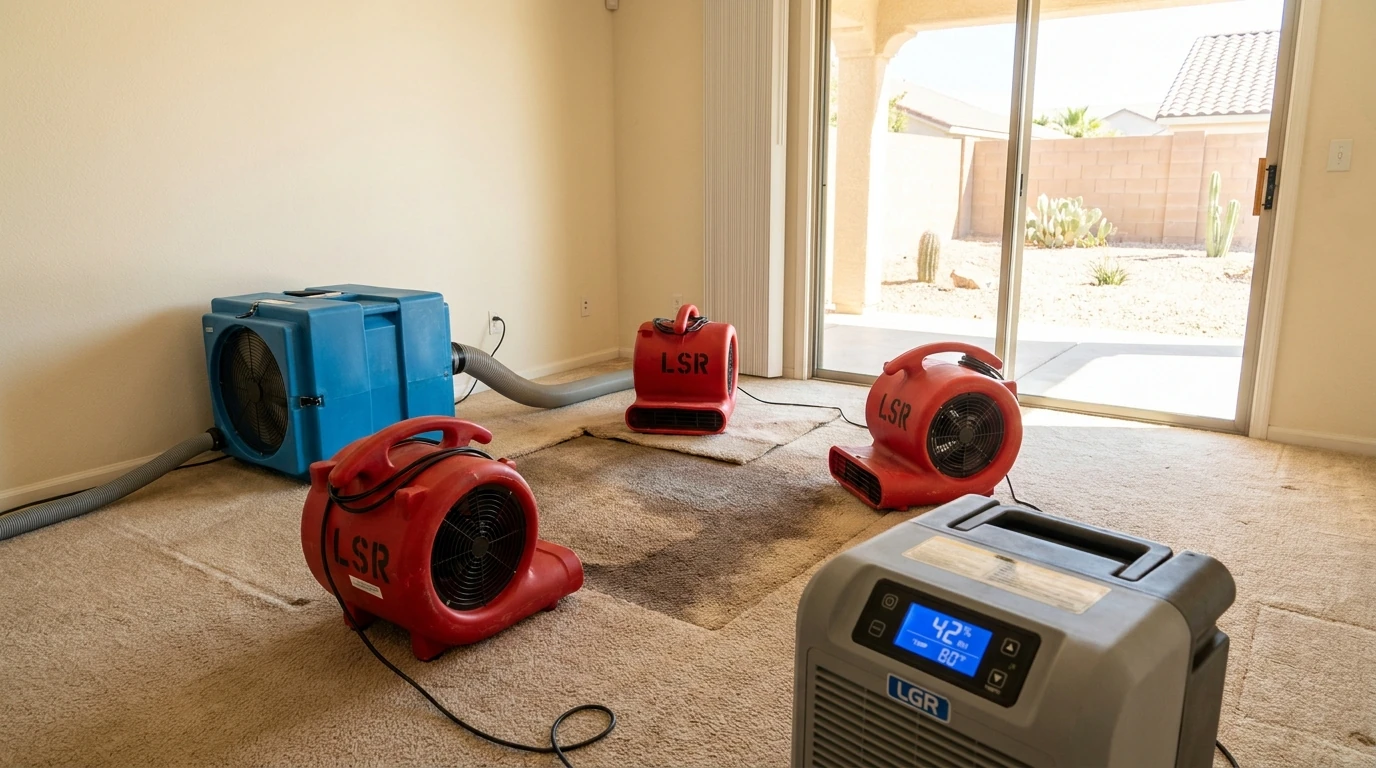
Structural drying is where the real work happens. LGR (low-grain-refrigerant) dehumidifiers and air movers are placed based on the moisture map, not evenly spread around the room, and run until the materials hit a dry standard, typically 3 to 5 days depending on how much was affected and how dense the materials are. Henderson’s low ambient humidity actually helps here: drying often moves faster than in a coastal market, but it also means a slab leak can mask itself behind dry-feeling tile while moisture tracks sideways under the floor. The final phase is repair, putting drywall, flooring, baseboards, and paint back, which can be a same-crew handoff or a separate reconstruction scope depending on the extent.
Will Homeowners Insurance Cover Water Damage in Henderson?
Most homeowners insurance policies cover water damage that is sudden and accidental, like a burst pipe or a failed appliance hose, but they typically exclude damage from gradual leaks you could have caught earlier. The distinction the adjuster draws is intent and duration, not just the water itself.
A slab leak claim often turns on how long the leak had been running. If it surfaces as a sudden wet spot, it’s usually covered. If the adjuster finds long-term staining or a water bill pattern suggesting months of slow loss, coverage can be denied as “lack of maintenance.” This is why documentation from the first visit matters: moisture readings, photos, and a written scope of work are what support a claim rather than dispute it. Our full breakdown of what homeowners insurance covers goes deeper into policy language and what’s typically excluded.
What Should You Do Right Now?
If you have active water damage, shut off the water source if you can safely access it, move valuables off the floor, and avoid running electrical devices in standing water. Then get a moisture assessment started before you decide anything else.
Don’t wait to see if it “dries on its own.” A same-day inspection gives you a real moisture map and a written scope, which protects you whether you’re filing a claim or paying out of pocket. Request a water damage assessment and a technician can walk you through what’s actually wet, what’s salvageable, and what the drying plan looks like before any work starts.
Water damage in Henderson rarely looks as bad on day one as it becomes by day five. Life Savers Restoration LLC handles the inspection, extraction, and drying in-house, with mold remediation and reconstruction available if the loss runs deeper than the surface.
About Life Savers Restoration LLC
Life Savers Restoration LLC is an IICRC Certified Firm serving Henderson and the greater Las Vegas valley since 2019, licensed under Nevada contractor license #0091001. The company holds IICRC certifications in Water Restoration (WRT), Structural Drying (ASD), and Mold Remediation (AMRT), and is rated 4.8 stars across 247 Google reviews. Life Savers Restoration provides 24/7 emergency water damage, mold, fire, and storm damage response across Henderson, Las Vegas, and surrounding Clark County communities.
Need help now? Call Life Savers Restoration LLC at (702) 845-1325.